
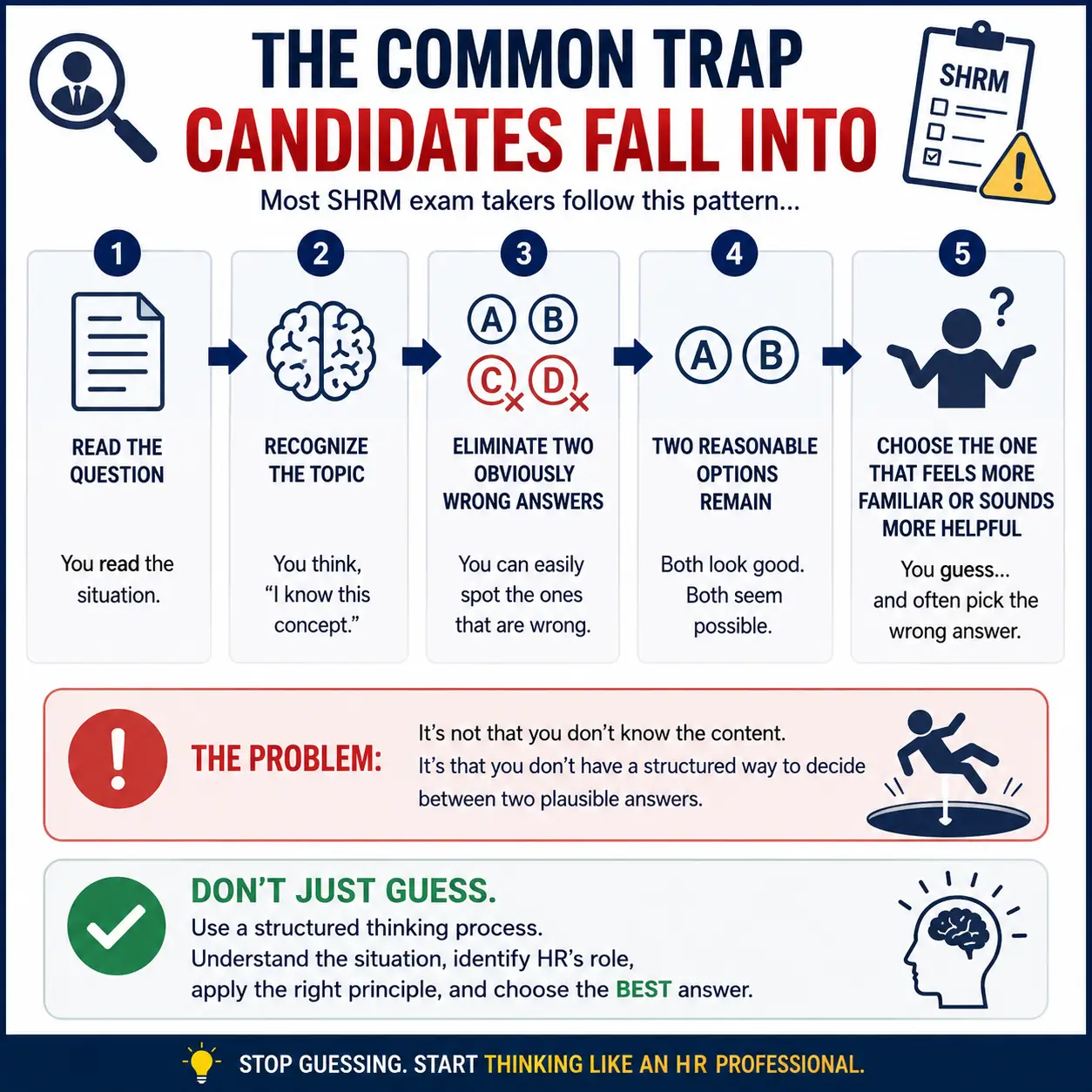
SHRM Exam Prep - The Common Trap Candidates Fall Into
Sun, 09 Aug 2026
Follow the stories of academics and their research expeditions

As the field of human resources continues to grow and evolve, HR professionals are increasingly seeking to enhance their skills and knowledge through certification programs. However, with so many HR certification programs available, it can be difficult to determine which one is the right fit for your career goals and needs. Here are some key factors to consider when choosing the right HR certification program:
1. Determine your career goals: Before selecting an HR certification program, it is important to consider your long-term career goals. Do you want to specialize in a particular area of HR, such as compensation or talent management? Or are you looking for a broader program that covers all areas of HR? Understanding your career goals will help you select a program that aligns with your professional aspirations.
2. Consider program content: Each HR certification program has different content, with some programs covering a broad range of topics, while others focus on specific areas of HR. Review the program content to determine if it covers the topics that are most relevant to your current or desired role.
3. Look for accreditation: Accreditation provides assurance that the HR certification program has met certain standards of quality and rigor. Look for programs that are accredited by recognized accrediting bodies such as the HR Certification Institute (HRCI) or the Society for Human Resource Management (SHRM).
4. Consider program delivery: HR certification programs can be delivered in a variety of formats, including online courses, self-study, and in-person classes. Consider your learning style and schedule when selecting a program format that will work best for you.
5. Evaluate program cost: HR certification programs vary in cost, from several hundred to several thousand dollars. Consider your budget when selecting a program and evaluate the return on investment based on your career goals.
6. Research program reputation: It is important to research the reputation of the HR certification program and the organization that offers it. Look for testimonials or reviews from current or past program participants, and speak with colleagues or mentors who may have experience with the program.
7. Determine eligibility requirements: HR certification programs typically have eligibility requirements, such as minimum education or work experience requirements. Review the eligibility requirements to ensure that you meet them before investing time and money in a program.
8. Consider industry recognition: Some HR certification programs are more widely recognized in certain industries or geographic regions. Consider the industry or region in which you work or plan to work when selecting a program, and research which certifications are most valued in that area.
9. Look for continuing education requirements: HR certification programs typically require ongoing continuing education to maintain certification. Consider the ongoing education requirements when selecting a program, and determine if they align with your long-term career goals and learning needs.
10. Seek advice from mentors or colleagues: If you are unsure about which HR certification program to pursue, seek advice from mentors or colleagues who have experience in the field. They can provide valuable insights and recommendations based on their own experiences.
In conclusion, choosing the right HR certification program is an important decision that can have a significant impact on your career in human resources. By considering your career goals, program content, accreditation, program delivery, cost, reputation, eligibility requirements, industry recognition, and continuing education requirements, you can select a program that will provide the knowledge, skills, and credentials you need to advance in the field of HR. Remember to do your research and seek advice from trusted sources to ensure that you make the best decision for your career.
Sun, 09 Aug 2026
Sat, 04 Jul 2026
Tue, 05 May 2026


Empower your exam success with our all-in-one learning platform. From in-depth courses to practical e-books, everything you need is here with lifetime access, 24/7 support, and unbeatable prices
Leave a comment